





From Cot to First Bed: How to Make the Transition Easy for Your Toddler
April 08, 2026
Moving your child from a cot to their first “grown-up” bed is a big milestone - for both you as parents and for your child.
It’s a step towards independence, but it can also bring questions: Are they ready? Will they sleep well? Is it safe?
The good news is that with the right approach - and the right bed - this transition can feel exciting rather than overwhelming.
In this guide, we’ll explore when to make the move, what to look for in a first bed, and how to create a safe, comfortable space that supports your child as they grow.
1. When Is the Right Time to Move from Cot to Bed?
Common signs your child may be ready include:
- Climbing out of their cot
- Outgrowing the space
- Showing curiosity about a “big bed”
- Wanting more independence
Safety is often the biggest trigger - once a child starts climbing out, moving to a lower bed becomes the safer option.
The key is to choose a bed that bridges the gap between security and independence - giving your child freedom, while still helping them feel safe.
️2. What Makes a Good First Bed?
A toddler’s first bed isn’t just a smaller version of an adult bed - it needs to be designed specifically for this stage of development.
Here are the most important features to look for:
Low sleeping height
Being closer to the floor helps reduce the risk of falls and allows children to climb in and out confidently on their own.
Safety rails
These provide reassurance during the early stages, helping prevent children from rolling out while they adjust.
Sturdy, durable construction
A solid wooden frame provides stability and a sense of security - something children instinctively respond to.
Room to grow
Beds that fit a standard UK single mattress (90 × 190 cm) can be used for many years, making them a practical long-term choice.
How Stompa supports this stage:
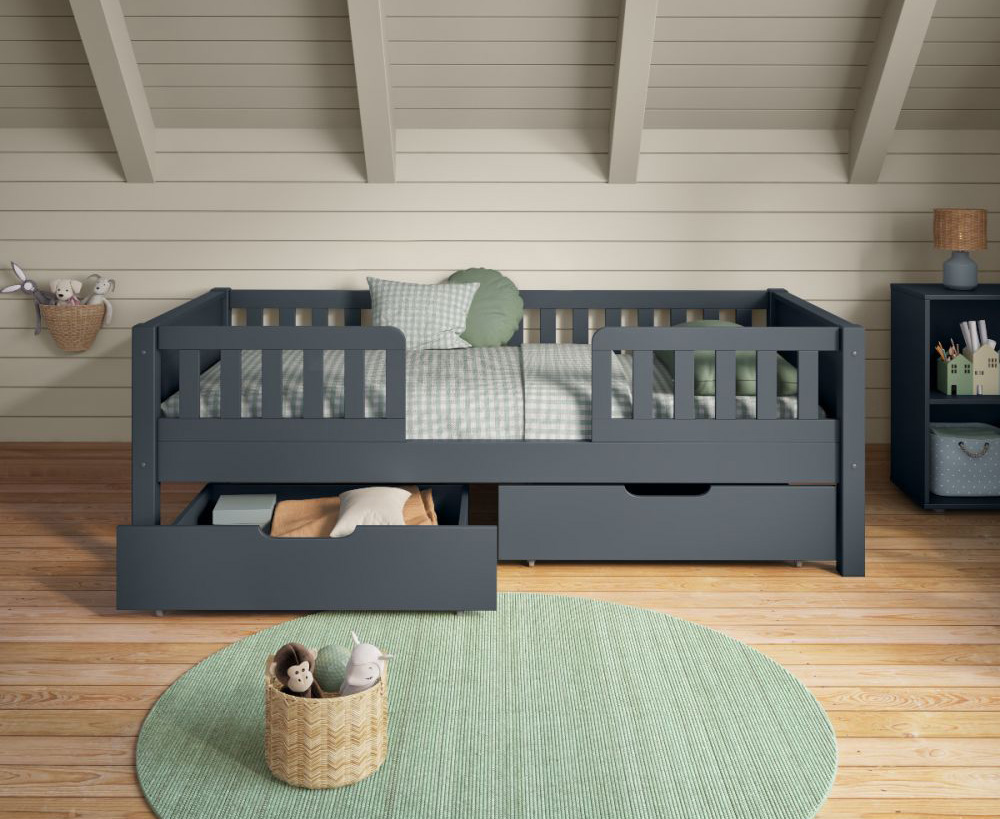
Stompa’s junior beds are designed with all of these features in mind - combining low-level access, optional safety rails, and durable wooden construction to create a safe, supportive sleep space from around 18 months+.
3. Encouraging Independence (The Montessori Approach)
One of the biggest shifts during this transition is giving your child more independence - and this is where Montessori-inspired design comes into its own.
Floor beds, or low-level beds, allow children to:
- Get in and out of bed safely on their own
- Explore their room freely
- Build confidence in their own routines
Rather than being “placed” into a cot, children begin to take ownership of their sleep space - which can support more positive bedtime habits over time.
A practical example:
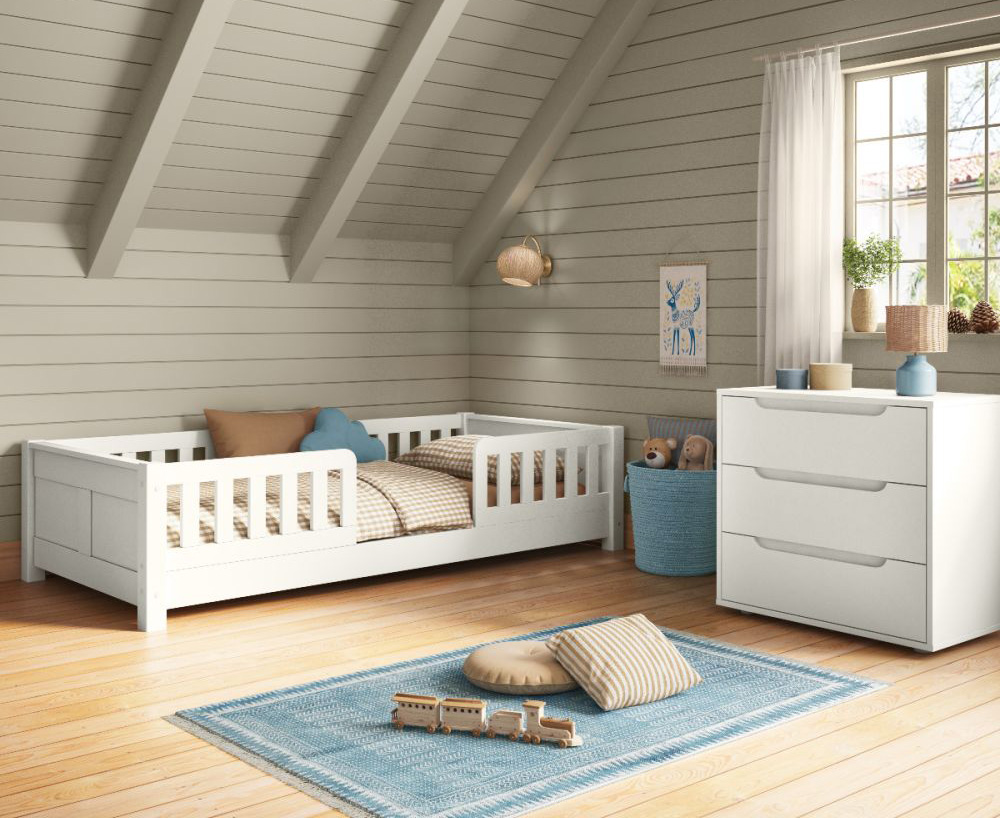
A junior floor bed with built-in safety rails offers the best of both worlds - freedom of movement, combined with a reassuring boundary during sleep.
This balance is especially helpful for toddlers who are just beginning to explore independence but still need security at night.
4. Keeping Things Calm (and Tidy)
Toddlers come with a surprising amount of “stuff” - toys, books, bedding, clothes - and a cluttered room can make bedtime more unsettled.
Research from UK sleep charity, The Sleep Charity, highlights that a calm, uncluttered bedroom environment - including reduced noise, soft lighting and minimal distractions - can significantly support better sleep routines in children.
Creating a space that feels organised and predictable helps children wind down more easily at bedtime.
That’s where thoughtful storage makes a real difference.
Practical Ideas:
- Use underbed drawers for spare bedding or toys
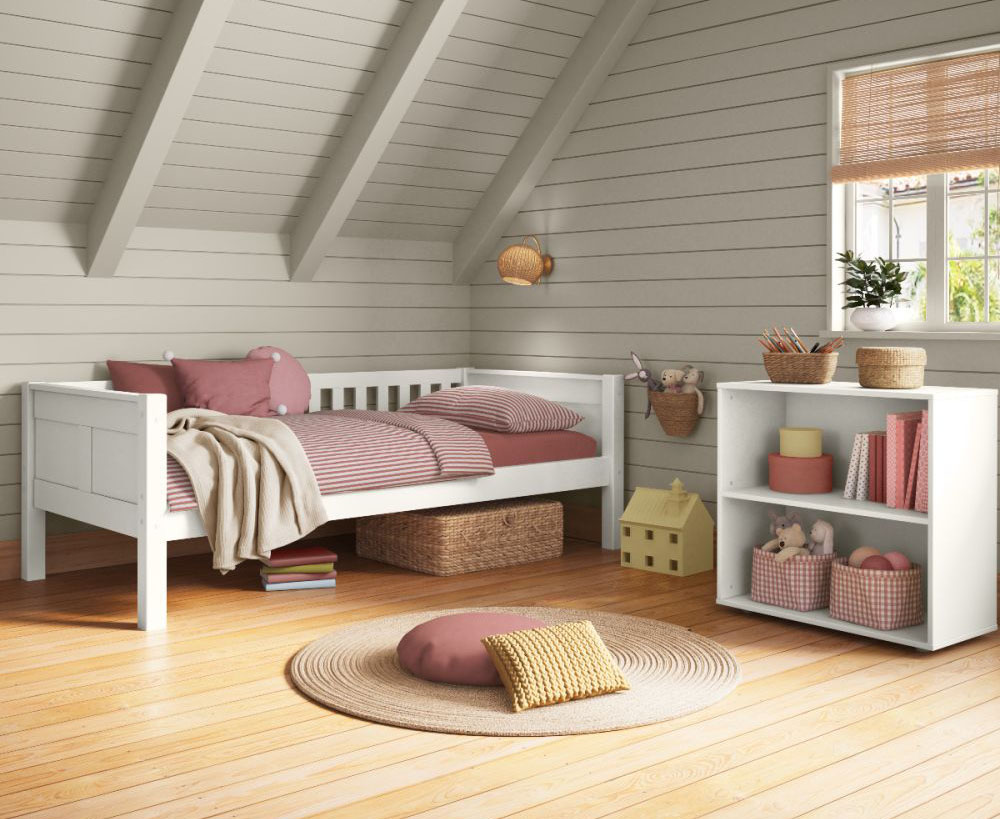
- Keep books within reach using low bookcases
- Choose furniture that encourages independence (easy to access, child-height)
How this fits with your space:
Junior beds with built-in storage are especially useful in smaller bedrooms, helping keep the room organised without adding extra furniture.
Pairing the bed with a bookcase, chest of drawers or a wardrobe can create a calm, practical environment that supports both play and rest.
5. Choosing a Bed That Grows With Your Child
One of the biggest concerns parents have is whether they’ll need to replace the bed again in a year or two.
That’s why flexibility matters.
Look for features like:
- Removable safety rails (for when your child is older)
- Full-size mattress compatibility
- Timeless design and colours
Why this matters:
A well-designed junior bed can take your child from toddler years through to early childhood - making it a smart, long-term investment.
As your child grows, the room can then evolve naturally - perhaps moving on to a mid sleeper, bunk bed, or high sleeper depending on their needs and available space.
6. Tips for a Smooth Transition
Even with the perfect bed, a little preparation goes a long way in helping your child adjust.
Here are some simple ways of making the transistion easier:
Keep routines consistent
Stick to familiar bedtime routines - same story, same time, same comfort items.
Let them feel involved
Allow your child to choose their bedding or favourite soft toy for the new bed.
Add reassurance
A soft night light can help children feel more secure in their new space.
Start gradually
Some parents begin with naps in the new bed before moving to full nights.
Make the room safe
Since your child can now get out of bed independently, ensure the room itself is safe and child-friendly.
A Confident First Step
Moving from a cot to a first bed is about more than sleep it’s a step towards independence, confidence, and growing up.
With the right setup, it can be a positive and empowering experience for your child, helping them feel secure while giving them the freedom to explore their space.
Thoughtfully designed furniture plays an important role in this transition - creating a bedroom that supports both comfort and development.
At Stompa, our junior beds are designed to do exactly that: supporting safe, confident transitions while adapting to the needs of growing families.
Want More Bedroom Ideas?
if you’re not quite sure which option is right for your child, we’re here to help. Our team is always happy to talk through the different styles, safety features and practical considerations to help you choose with confidence.
You can call us on 01943 608 775
Or email us at [email protected]
Or contact us via our contact form
Because when it comes to your child’s sleep and wellbeing, it’s important to feel you’re in the right hands.