






Shared Kids’ Bedroom Ideas: Smart Space‑Saving Solutions for Siblings (2026 Guide)
July 20, 2026
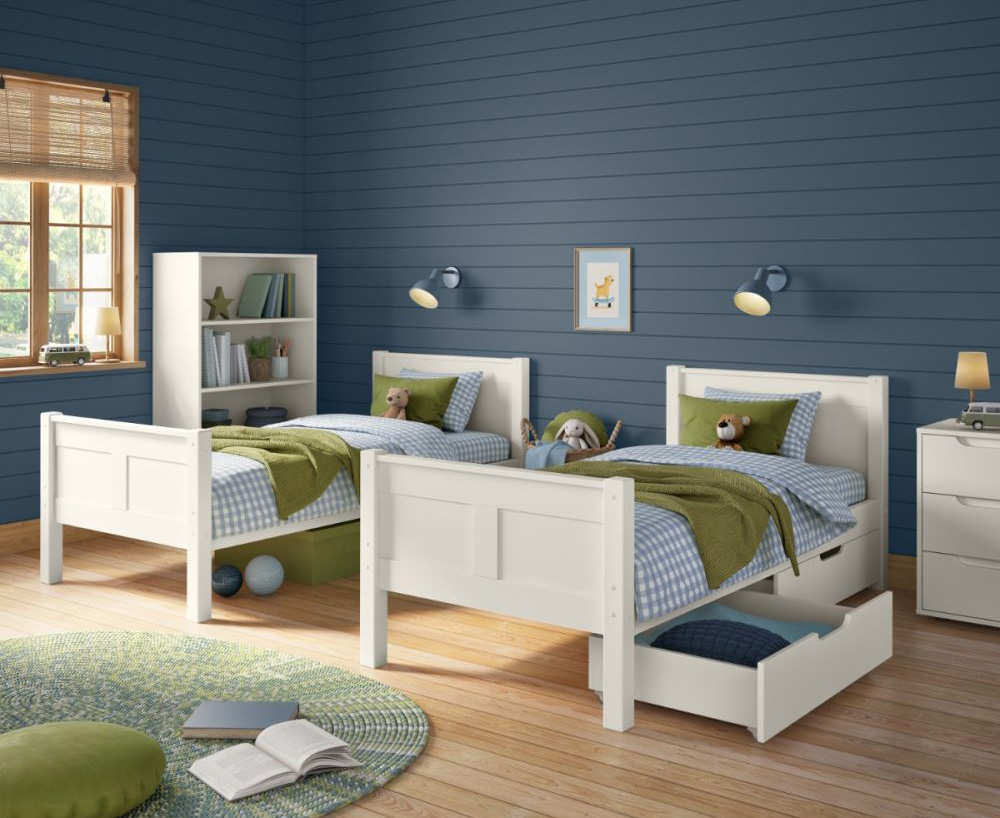
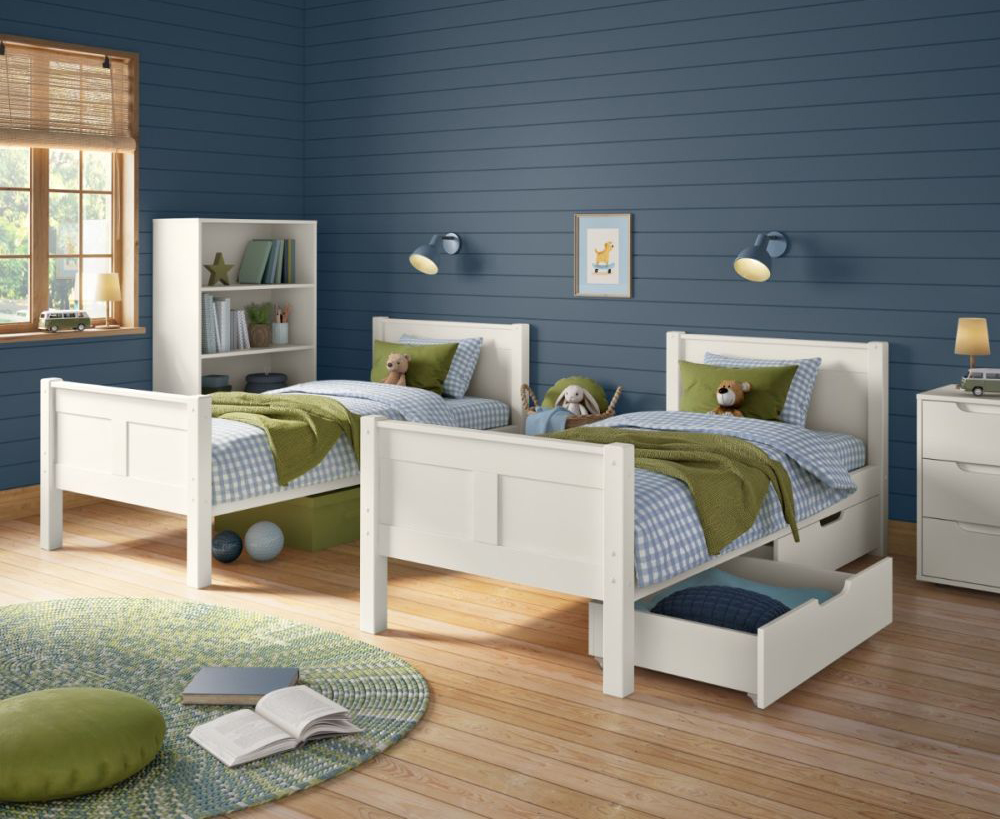
When siblings share a bedroom, the space needs to work harder than most rooms in the home. It must support sleep, storage, play, learning, downtime, and sometimes very different personalities and routines. Whether you’re designing a shared room for two young children, navigating an age gap, or trying to make a smaller room feel more functional, thoughtful planning can transform the space.
The good news? Shared kids’ bedrooms can work beautifully. With the right furniture, smart storage and a layout that suits your family’s daily routines, you can create a room that feels organised, comfortable and personal for everyone.
This guide explores practical shared kids’ bedroom ideas, space‑saving solutions, and bed setups that help siblings share a room happily - now and as they grow.
Best Shared Kids’ Bedroom Layout Ideas
A successful shared bedroom starts with understanding how the space is used day‑to‑day. Before choosing colours or furniture, think about the practicalities.
Plan the Room Around Daily Routines
Ask yourself:
- Do the children mainly use the room for sleep, or for play too?
- Is homework or quiet study part of the routine?
- Is storage currently a challenge?
- Will the room need to accommodate sleepovers?
- Are the children close in age or at very different stages?
A shared room for two young children will look very different from a room shared by a toddler and a teenager. Understanding these needs helps you choose furniture that genuinely improves everyday life.
Layout Ideas for Small Shared Bedrooms
Small rooms benefit from:
- vertical furniture (tall bookcases, bunk beds)
- underbed storage
- wall‑mounted shelves
- compact desks
- furniture that serves multiple purposes
Keeping the centre of the room clear helps it feel larger and more usable.
Layouts for Siblings with Different Ages
When children are at different stages, consider:
- separate zones for sleep and study
- different lighting setups
- individual storage areas
- furniture that adapts as they grow
This helps each child feel comfortable and supported in their own routines.
️Best Beds for Shared Kids’ Rooms (Bunk, Storage & More)
The bed setup is the foundation of any shared kids’ bedroom. The right choice depends on room size, children’s ages, storage needs and long‑term flexibility.
Bunk Beds for Shared Bedrooms
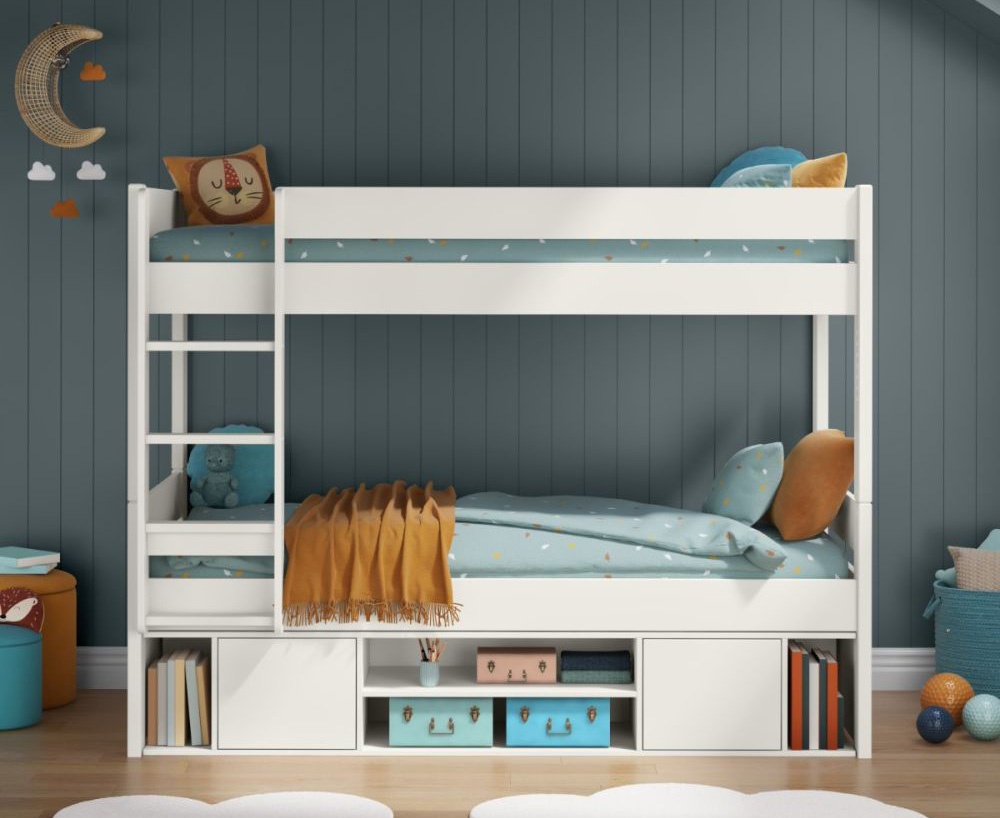
Bunk beds are one of the most effective space‑saving solutions for siblings sharing a room. By sleeping vertically, they free up valuable floor space for play, storage or study areas.
Look for:
- sturdy construction
- detachable frames
- guard rails and safety features
- integrated storage options
Detachable bunk beds are especially useful because they can be separated into two single beds as children grow.
Detachable Bunk Beds for Long‑Term Flexibility
Detachable bunks offer:
- long‑term adaptability
- cost‑effective use over many years
- flexibility during room redesigns
- suitability for changing routines
They’re ideal for families who want a future‑proof solution.
Storage Beds to Reduce Clutter
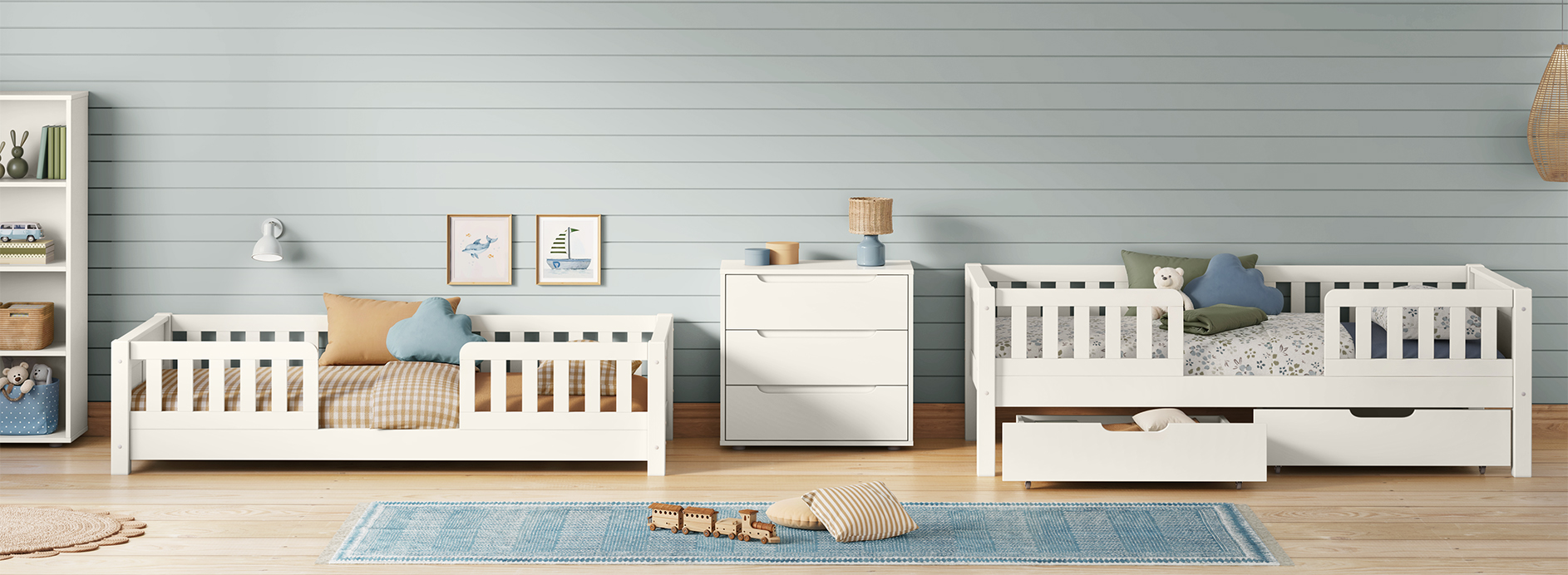
Storage quickly becomes essential in shared rooms. Beds with integrated drawers or underbed storage help keep clothes, bedding, toys and everyday essentials organised without taking up extra floor space.
A more organised room feels calmer and easier for children to manage independently.
Trundle Beds for Sleepovers
If sleepovers are part of family life, trundle beds offer flexibility without permanently taking up space. They’re also useful for occasional shared sleeping arrangements or visiting relatives.
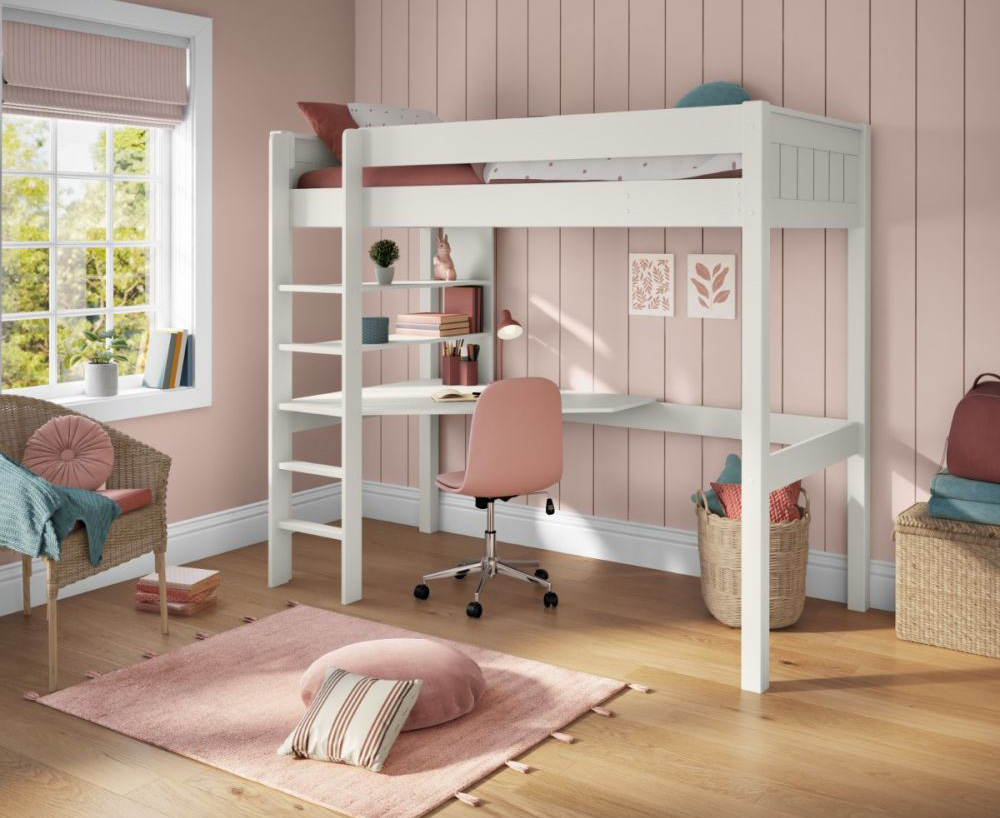
High Sleepers for Older Children
For older children or teenagers who share a room, high sleepers with integrated desks can help create individual zones within a single space.
Combining sleep and study in one footprint helps maximise room functionality while supporting independence and routines. For younger children, mid sleepers with a pull-out desk can be an excellent space-saving solution.
Space‑Saving Storage Ideas for Shared Kids’ Bedrooms
Clutter builds quickly when more than one child shares a room. Smart storage helps keep the space functional and stress‑free.
Use Vertical Space
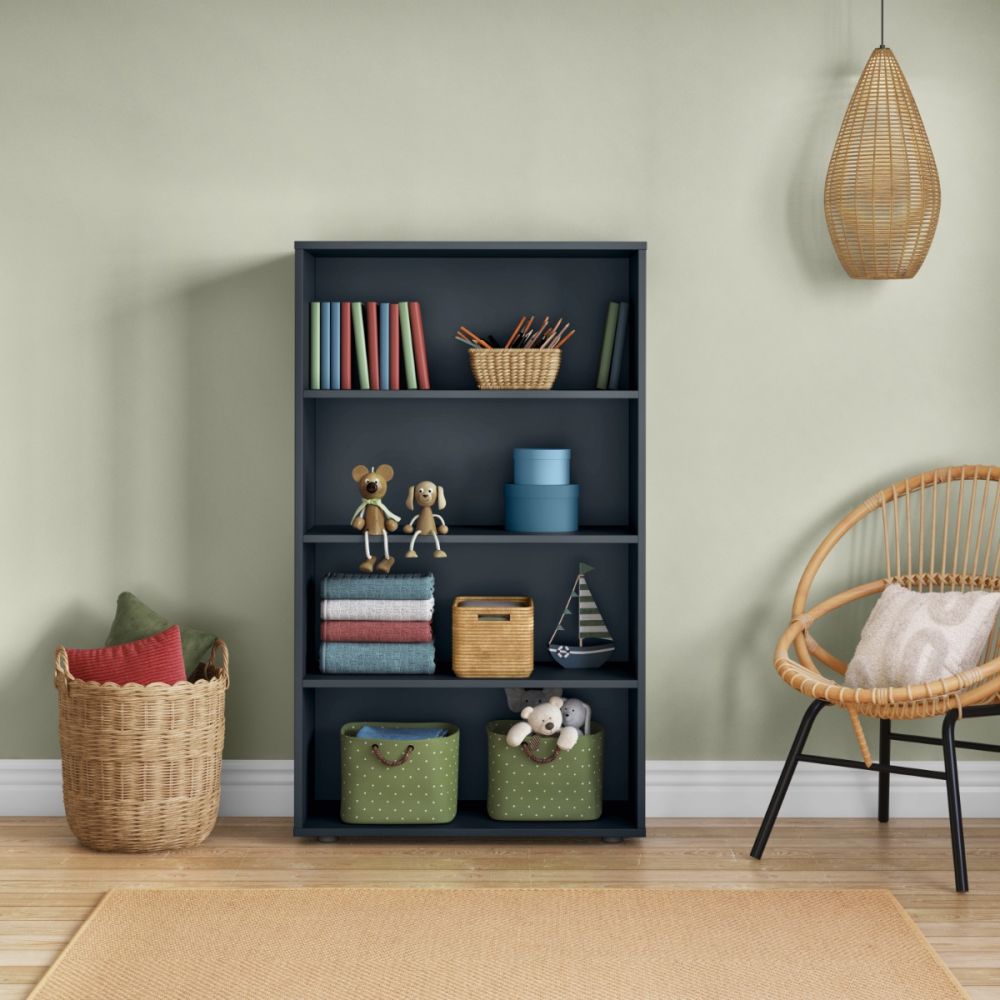
Tall bookcases, wall‑mounted shelves and peg rails maximise storage without using floor space.
Underbed Drawers and Hidden Storage
Underbed drawers are ideal for:
- clothes
- bedding
- toys
- seasonal items
Hidden storage keeps the room tidy and easy to maintain.
Shared vs Individual Storage Zones
Giving each child their own storage area helps reduce conflict and encourages independence.
Multi‑Purpose Furniture
Look for furniture that serves more than one purpose:
- storage benches
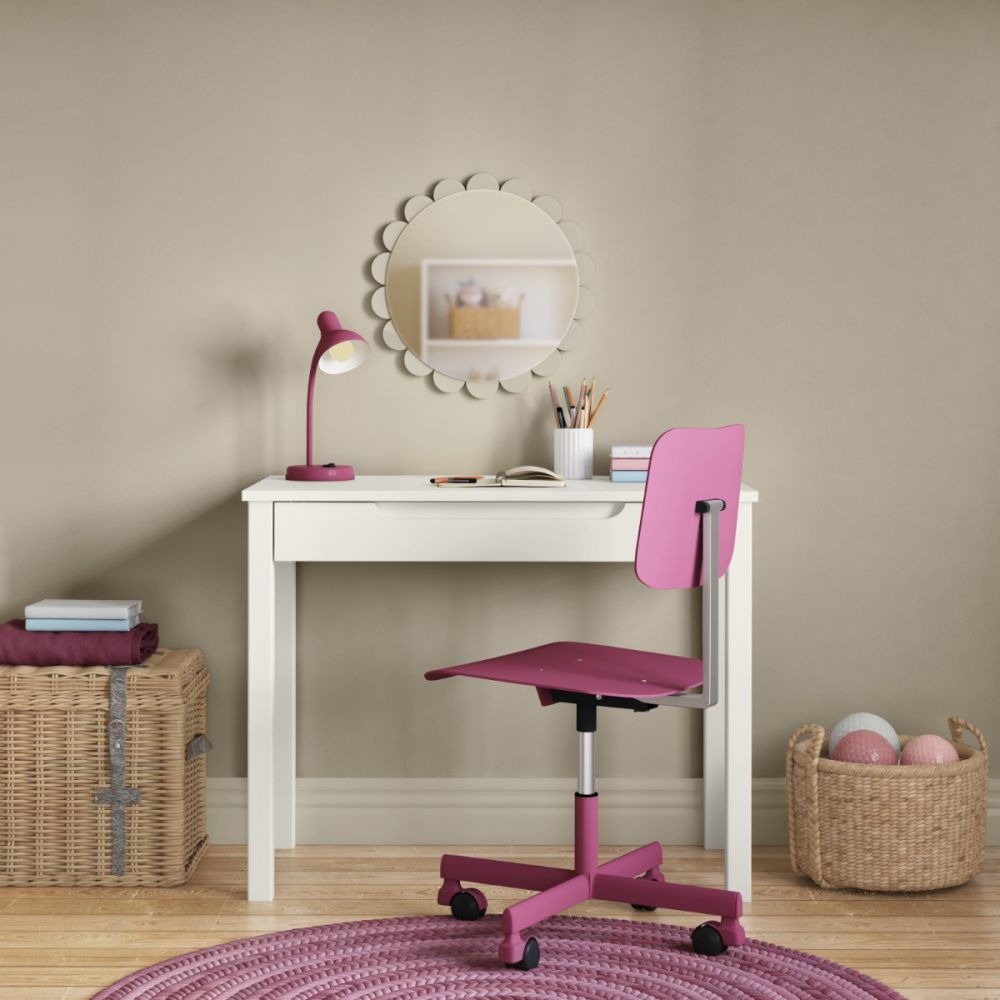
- desks with drawers
- beds with integrated shelving
- ottomans with hidden compartments
Everything should have a home - this is the golden rule of shared bedrooms.
How to Create Personal Space for Each Child
One of the biggest concerns parents have about shared bedrooms is helping each child feel like the space still belongs to them. Even in small rooms, personal touches make a big difference.
Individual Reading Lights
Personal reading lights give each child control over their own bedtime routine.
Personal Shelves or Display Areas
Small shelves or display boxes allow children to showcase their favourite items.
Different Bedding Styles
Matching furniture doesn’t mean matching bedding. Allowing different colours or patterns helps children express their personality.
Privacy Solutions for Small Rooms
Consider:
- curtains around bunks
- room dividers
- canopy beds
- separate study corners
These small touches help children feel comfortable sharing a space.
Shared Bedroom Ideas for Different Ages
Children grow quickly - and bedrooms need to adapt with them.
Toddler + School‑Age Combinations
Focus on:
- safe sleeping arrangements
- accessible storage
- durable furniture
- clear zones for play and quiet time
School‑Age + Teenager Combinations
Older children need:
- study space
- privacy
- personal lighting
- more mature décor options
High sleepers and detachable bunks work well here.
Furniture That Adapts Over Time
Choose furniture designed to grow with children:
- detachable bunks
- adjustable desks
- modular storage
- long‑lasting materials
This avoids unnecessary changes later on.
Safety Tips for Shared Kids’ Bedrooms
Safety is essential in shared rooms, especially when bunk beds or high sleepers are involved.
Bunk Bed Safety Guidelines
- Only older children should sleep on the top bunk
- Guard rails must be secure
- Ladders should be sturdy and easy to climb
- Keep the area around the bunk clear
Safe Storage Placement
Avoid placing heavy items high up where children may reach dangerously.
Age‑Appropriate Furniture Choices
Choose furniture that suits each child’s stage of development.
FAQs: Shared Kids’ Bedrooms
What is the best bed for siblings sharing a room?
Bunk beds or detachable bunk beds are the most space‑efficient and flexible options.
How do you create personal space in a shared kids’ bedroom?
Use individual shelves, reading lights, bedding styles and clearly defined storage zones.
How do you design a shared bedroom for different ages?
Create separate zones for sleep, study and play, and choose adaptable furniture.
How do you maximise storage in a shared kids’ room?
Use vertical storage, underbed drawers, multi‑purpose furniture and clear organisation systems.
Are bunk beds safe for younger children?
Yes, when used correctly - younger children should sleep on the bottom bunk, and guard rails must be secure.
Final Thoughts
Shared bedrooms can feel challenging at first, but with thoughtful planning they can become spaces that work beautifully for the whole family. By combining practical layouts, smart storage and adaptable furniture, you can create a room that feels organised, comfortable and personal — for everyone sharing it.
Looking for inspiration for a shared children’s bedroom?
Explore Stompa’s range of bunk beds, high sleepers, storage beds and space-saving furniture designed for modern family living.