






How to Design a Child's Bedroom That Supports Sleep, Study, Play & Growth - A Parent's Guide to Smarter Bedroom Design
October 23, 2025
In today's UK homes, children's bedrooms have to do far more than simply provide a place to sleep. With limited space, more time spent studying at home, and a renewed awareness of children’s wellbeing, parents are looking for ways to make bedrooms that support their child's rest, learning, creativity, and growth - all within one multifunctional space.
Recent UK research has shown how critical that environment really is. A University of Leeds study found that 36% of children aged 6–11 get eight hours or less of sleep on a weekday, even though the NHS recommends around 10 hours for this age group (University of Leeds, 2022. The Sleep Charity, a leading UK organisation, adds that bedroom environment - including clutter, light, temperature and devices - plays a major role in children's sleep quality (The Sleep Charity, 2023
So, what does an environment that truly supports a child’s wellbeing look like?
Let’s explore the four key roles every child’s bedroom should play - and how smart design and adaptable furniture can help.
1. Sleep: The Foundation of Everything
Sleep underpins children’s learning, behaviour, and emotional regulation. Yet many UK children don’t get enough. Research during and after the pandemic has found a clear link between poor sleep environments and increased anxiety levels among UK children (BMC Psychology, 2022)
The Sleep Charity recommends keeping the room between 16–20°C, using soft lighting, avoiding bright colours near the bed, and minimising electronics in the sleep zone. Clutter and mixed-use layouts can also confuse children’s sense of calm and routine.
Practical design ideas:
-
Clearly define the bed area as a 'sleep zone' – not for homework or play.
-
Keep the space under or around the bed tidy with built-in drawers or shelves.
-
Limit light sources and use blackout curtains or blinds.
-
Choose a sturdy, comfortable bed that feels safe and cosy.
How Stompa's beds can help:
A high sleeper or a mid sleeper with integrated storage or a study space below allows the sleeping area to stay uncluttered and peaceful. The raised bed naturally separates 'sleep' from 'activity' - helping children mentally wind down at night.
2. Study: Focus and Organisation in Small Spaces
With more UK children completing homework, reading or online study at home, bedrooms now double as learning environments. The University College London HomeSPACE study found that homes increasingly serve multiple purposes - study, play, and rest - within the same rooms, especially since COVID-19 (UCL, 2022)
A defined study space helps children focus and signals 'school mode.' It doesn’t have to mean a full-size desk - a compact, integrated study area is often more effective than squeezing a separate desk into a small room.
Practical design ideas:
-
Place the desk near natural light where possible.
-
Keep supplies accessible but contained (drawers or cubbies).
-
Use adjustable chairs and good task lighting.
How Stompa’s beds can help:
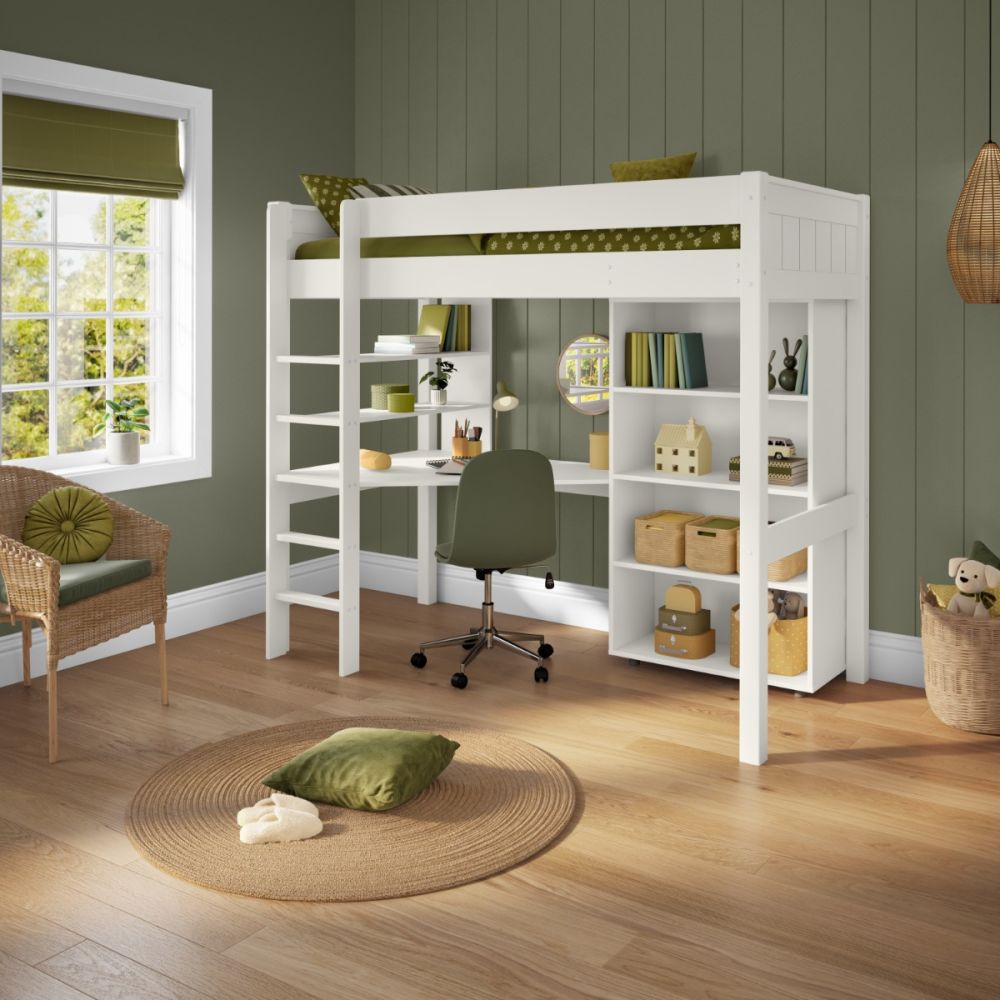
A mid-sleeper or high-sleeper with a built-in desk and storage below provides everything in one footprint - ideal for smaller UK bedrooms. The layout promotes concentration during the day and tidiness at night.
3. Play: Creativity and Wellbeing Indoors
Free play builds imagination, confidence, and social skills. But research from UCL warns that urban children are losing access to informal outdoor play spaces, making indoor environments even more vital (UCL, 2025).
Children’s rooms should allow space for creativity - but play areas also need to be safely integrated.
A University of Nottingham study on childhood falls highlights the importance of secure, age-appropriate furniture design, especially where climbing or bunk setups are used (University of Nottingham, 2014).
Practical design ideas:
-
Create a play nook or den within the room.
-
Keep storage low and accessible so children can tidy up independently.
-
Use soft furnishings, rugs, or tents to define the play area safely.
How Stompa's beds can help:
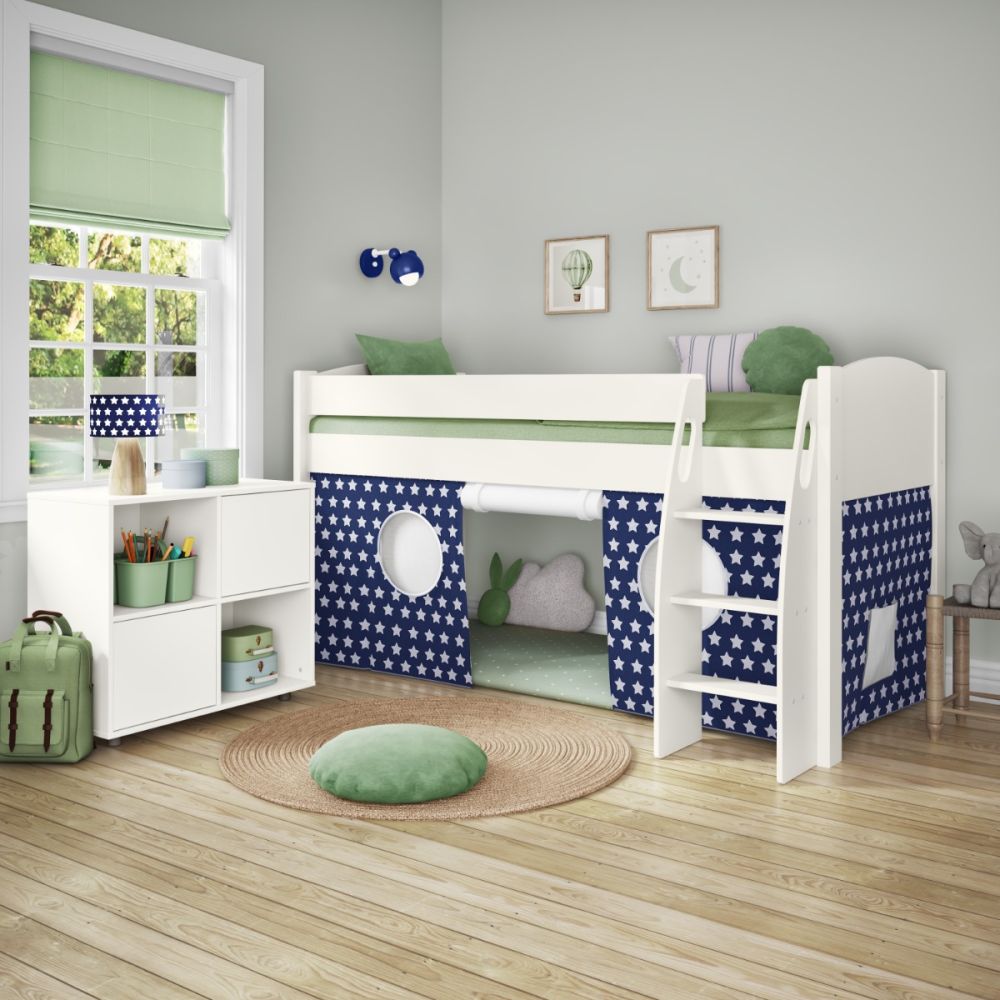
For younger children, a mid-sleeper with a fabric tent underneath creates a playful den or hide-out. It supports imaginative play while maximising floor space. The bed above stays structured and safe, and the tent area below becomes a world of creativity that can change as your child grows.
4. Growth: Future-Proof Design for Changing Needs
Children’s needs evolve rapidly - from toddler to teen, the same room has to accommodate different routines, interests, and physical requirements. Research published in BMC Psychology found that a child’s environment - including their bedroom layout and furniture - significantly affects both sleep quality and emotional wellbeing over time (BMC Psychology, 2022).
For parents, investing once in adaptable furniture is both practical and sustainable. It avoids the need for complete redesigns every few years.
Practical design ideas:
-
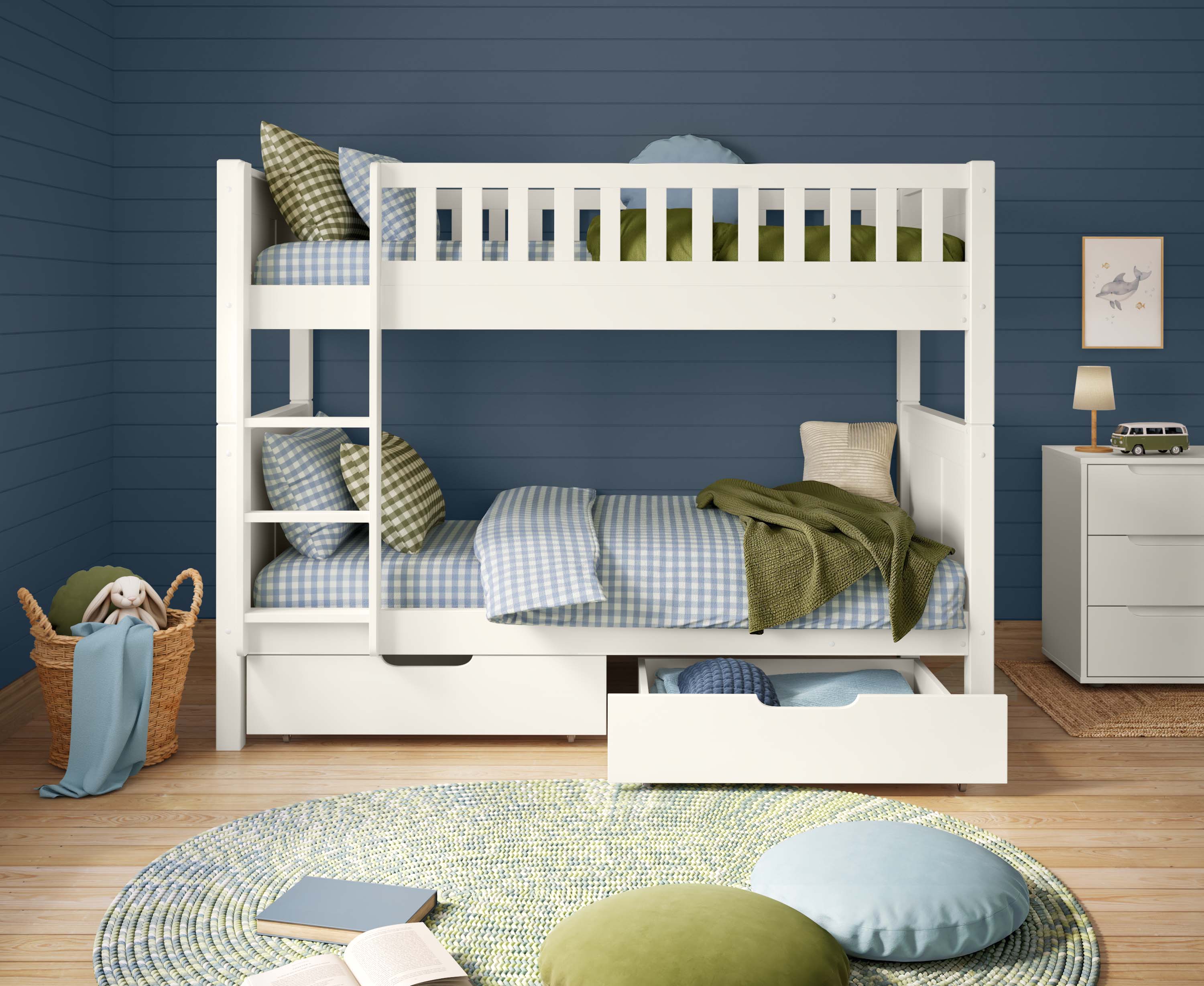
Choose convertible or detachable furniture, such as bunks that split into singles.
-
Opt for neutral finishes that suit changing styles and ages.
-
Design with flexibility - today's play space might become tomorrow’s study area.
How Stompa's beds can help:
A detachable bunk bed can be used as two single beds later, supporting siblings or visiting friends now, and separate rooms later.
A space-saving mid-sleeper or high sleeper with integrated storage and desk transitions smoothly from play-focused childhood to study-focused teenage years - a genuine long-term solution.
A Parents Checklist for a Smart, Supportive Bedroom
Before you start redesigning your child’s room, consider this checklist:
☐ Is there a clearly defined sleep zone free from distractions?
☐ Does the room maintain a comfortable temperature (16–20 °C)?
☐ Are study and play zones separated visually or spatially?
☐ Are all furniture pieces age-appropriate and safety-tested?
☐ Can the furniture adapt as your child grows?
☐ Is there enough built-in storage to keep the room tidy?
☐ Is the room easy for your child to navigate and personalise?
☐ Have you involved your child in choosing some design elements (to build ownership)?
Each of these elements aligns with UK research showing that environment and design directly influence children’s wellbeing, learning, and sleep.
How Stompa Designs with Families in Mind
At Stompa, we design premium children's beds and furniture that bring together sleep, study, play and storage - helping UK families make the most of every square metre.
-
Mid Sleepers with Tents – perfect for imaginative play and smaller spaces.
-
Mid Sleepers with pull-out desk and storage - a space-saving solution for study and storage for younger children.
-
High Sleepers with Desks & Storage – ideal for older children balancing study and rest.
-
Detachable Bunks – a flexible, long-term investment that adapts as families grow.
Our approach combines timeless design with durable craftsmanship, ensuring each piece supports the practical and emotional needs of growing children - safely, sustainably, and beautifully.
Conclusion: Designing for Wellbeing and Growth
Designing a child's bedroom is about much more than aesthetics. It's about supporting their sleep, focus, creativity, and growth within a nurturing, safe environment. Credible UK research - from the University of Leeds to The Sleep Charity and BMC Psychology — consistently shows that how a child's room is designed affects how they sleep, learn and feel.
By thinking about the bedroom as four zones — Sleep · Study · Play · Growth — and choosing furniture that adapts to each stage, parents can create spaces that truly work for family life.
A well-designed room is more than a beautiful space — it’s an environment that helps children thrive.
If you would like advice or help with furnishing your child's bedroom, we would be happy to assist you. Feel free to contact us.