





Shared Kids' Bedrooms: Smart Ideas for Creating a Space That Works for Everyone
May 19, 2026
When siblings share a bedroom, the space has to work harder.
It needs to support sleep, storage, play, learning, downtime, and sometimes even very different personalities and routines. Whether you are making space for siblings close in age, navigating an age gap, or simply trying to make a smaller room function better, thoughtful planning can make a huge difference.
The good news? Shared bedrooms can work beautifully.
With the right furniture, smart storage and a little planning, it is possible to create a room that feels calm, organised and practical for everyone.
In this guide, we explore smart shared bedroom ideas for children and how to create a space that works now and continues to work as they grow.
1. Start With How the Room Will Actually Be Used in a Shared Kids’ Bedroom
Before thinking about colours or layouts, start with how the room functions day to day.
Ask yourself:
- Will the room mainly be used for sleep?
- Do children need space for homework or studying?
- Is storage currently a challenge?
- Will the room need to support sleepovers?
- Are siblings similar in age, or at very different stages?
A shared room for two younger children will naturally look different from one shared by a toddler and a teenager.
Thinking practically about how the room is used helps you choose furniture that genuinely improves everyday family life - rather than simply fitting into the space.
️2. Choosing the Right Bed Setup for a Shared Kids’ Bedroom
The bed layout will shape how the entire room works.
The right choice depends on room size, children’s ages, storage needs and how long you want the setup to last.
Bunk Beds for Shared Bedrooms: Maximising Floor Space
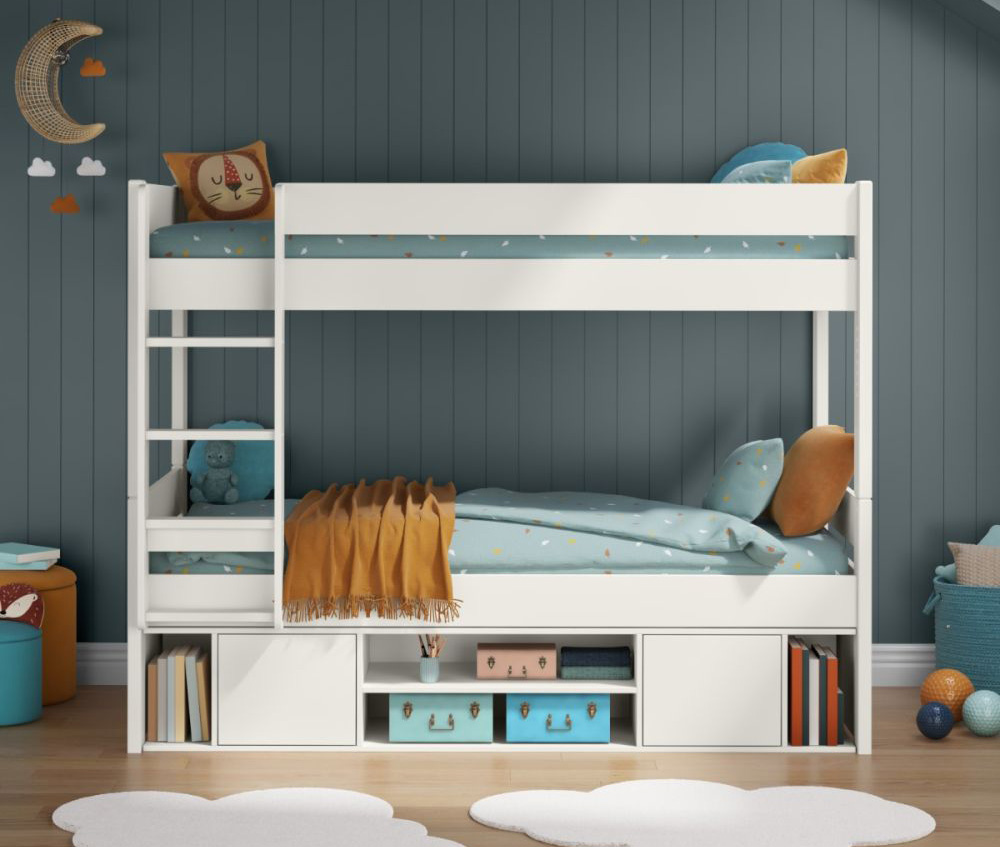
Bunk beds remain one of the most practical shared bedroom solutions.
By sleeping vertically, they free up valuable floor space for play, storage or study areas - especially useful in smaller bedrooms.
Look for bunk beds designed with longevity in mind, sturdy construction and practical features that make everyday life easier. Detachable bunk beds provide a long term and cost effective solution.
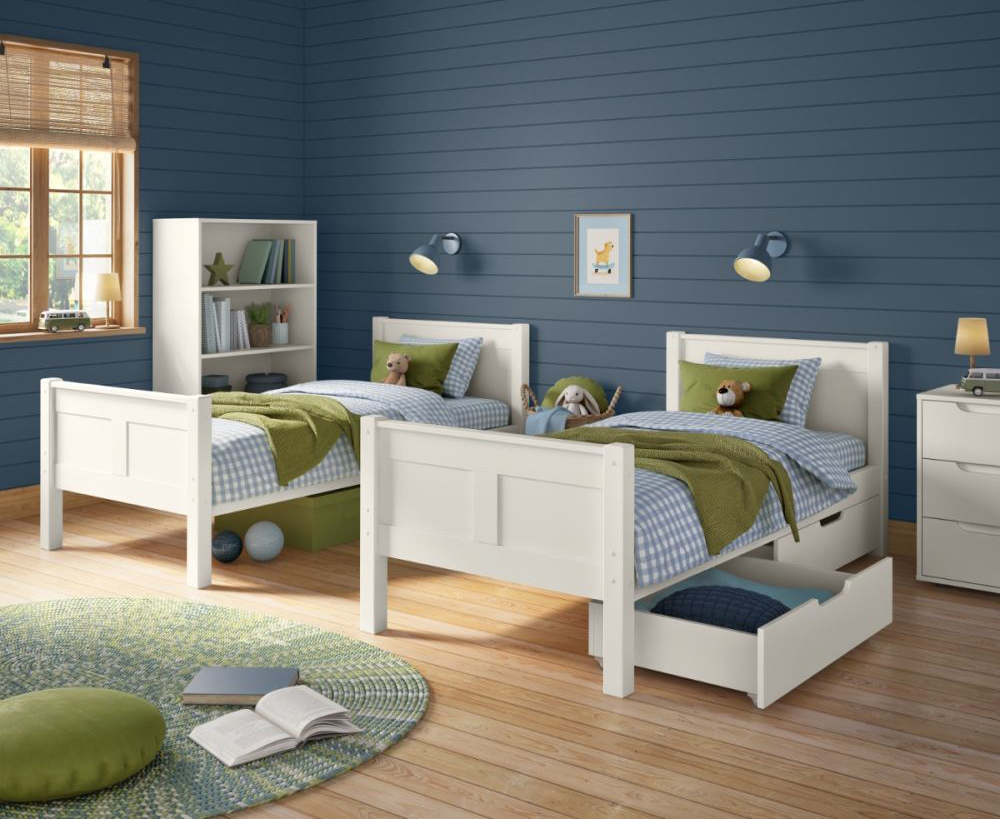
Storage Beds for Shared Children’s Bedrooms
Storage quickly becomes essential in shared rooms.
Beds with integrated drawers or underbed storage can help keep clothes, bedding, toys and everyday essentials organised without taking up additional floor space.
A more organised room often feels calmer and easier for children to manage independently.
Trundle Beds: Flexible Sleep Solutions for Growing Families
If siblings occasionally share or sleepovers are a regular feature, trundle beds can offer flexibility without permanently taking up more space.
They can also be particularly useful for families navigating changing sleeping arrangements.
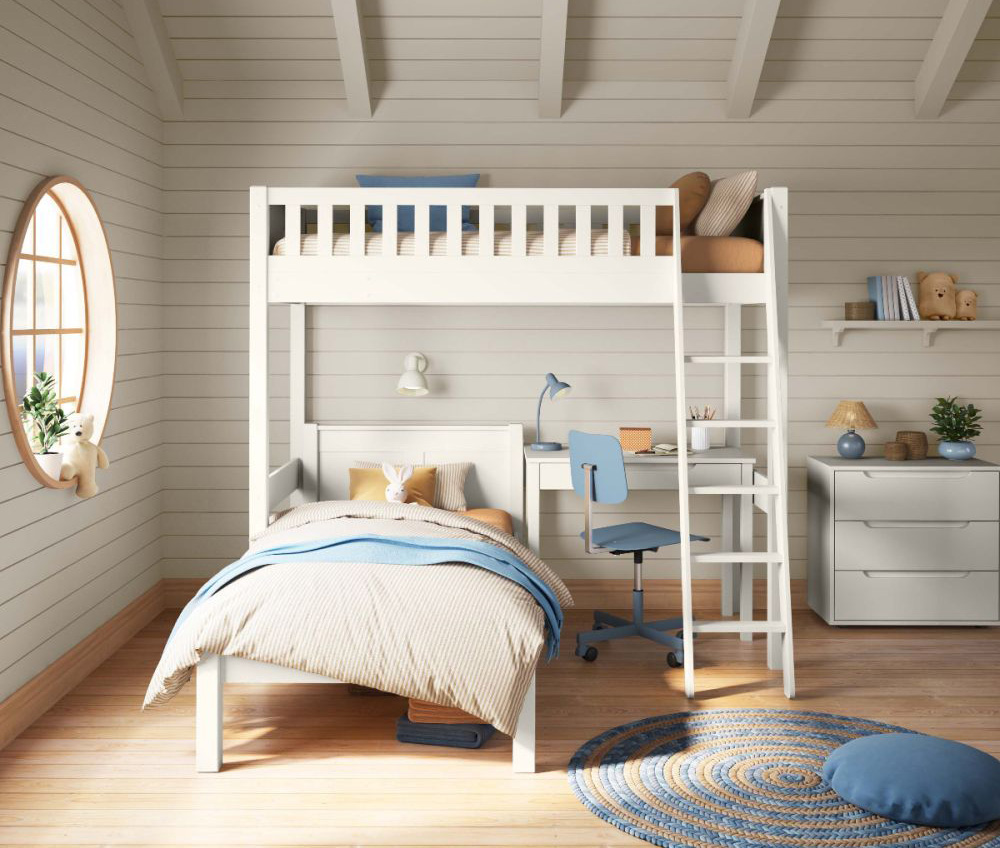
High Sleepers & Study Spaces for Older Children
For older children or teenagers who share a room, high sleepers with integrated desks can help create individual zones within a single space.
Combining sleep and study in one footprint helps maximise room functionality while supporting independence and routines. For younger children, mid sleepers with a pull-out desk can be an excellent space-saving solution.
3. Smart Storage Ideas for Shared Kids’ Bedrooms
When more than one child shares a room, clutter can build quickly.
Creating practical storage from the beginning can make the room easier to maintain and less stressful for everyone.
Consider:
- Dedicated storage for each child.
- Tall bookcases to maximise vertical space.
- Underbed drawers for clothes and bedding.
- Shelving for books, keepsakes and favourite items.
- Furniture that serves more than one purpose.
A good rule of thumb is simple:
Everything should have a home.
The easier it is for children to tidy up, the more likely the room is to stay functional.
4. How to Create Personal Space in a Shared Bedroom
One of the biggest concerns parents have with shared bedrooms is helping children feel like the space still belongs to them.
Even in smaller rooms, personal touches can help children feel comfortable and settled.
This could include:
- Individual shelves or display areas.
- Personal reading lights.
- Different bedding styles or colour palettes.
- Clearly defined storage areas.
- A small desk or quiet corner for older children.
Shared bedrooms do not need to feel identical to feel cohesive.
Allowing some individuality often helps children feel more comfortable sharing the space.
5. Designing a Shared Bedroom for Different Ages
Children grow quickly - and bedrooms need to adapt with them.
A room that works perfectly for two younger children may feel less practical as school, hobbies, studying, and independence become more important.
This is why flexibility matters.
When choosing furniture, think about:
- Long-term durability.
- Adaptable layouts.
- Storage that can evolve with time.
- Furniture suited to changing routines.
- Sleep solutions that support growing children.
Choosing furniture designed to grow with children can help avoid unnecessary changes later on.
6. Final Thoughts: Creating a Shared Kids’ Bedroom That Works Long-Term
Shared bedrooms can feel challenging at first, but with thoughtful planning, they can become spaces that work beautifully for the whole family.
The key is choosing solutions that support both everyday life and changing needs over time.
By combining practical layouts, smart storage and adaptable furniture, it is possible to create a room that feels organised, comfortable and personal - for everyone sharing it.
Looking for inspiration for a shared children’s bedroom?
Explore Stompa’s range of bunk beds, high sleepers, storage beds and space-saving furniture designed for modern family living.